
In Conversation with Santhoshkumar Anandakrishnan
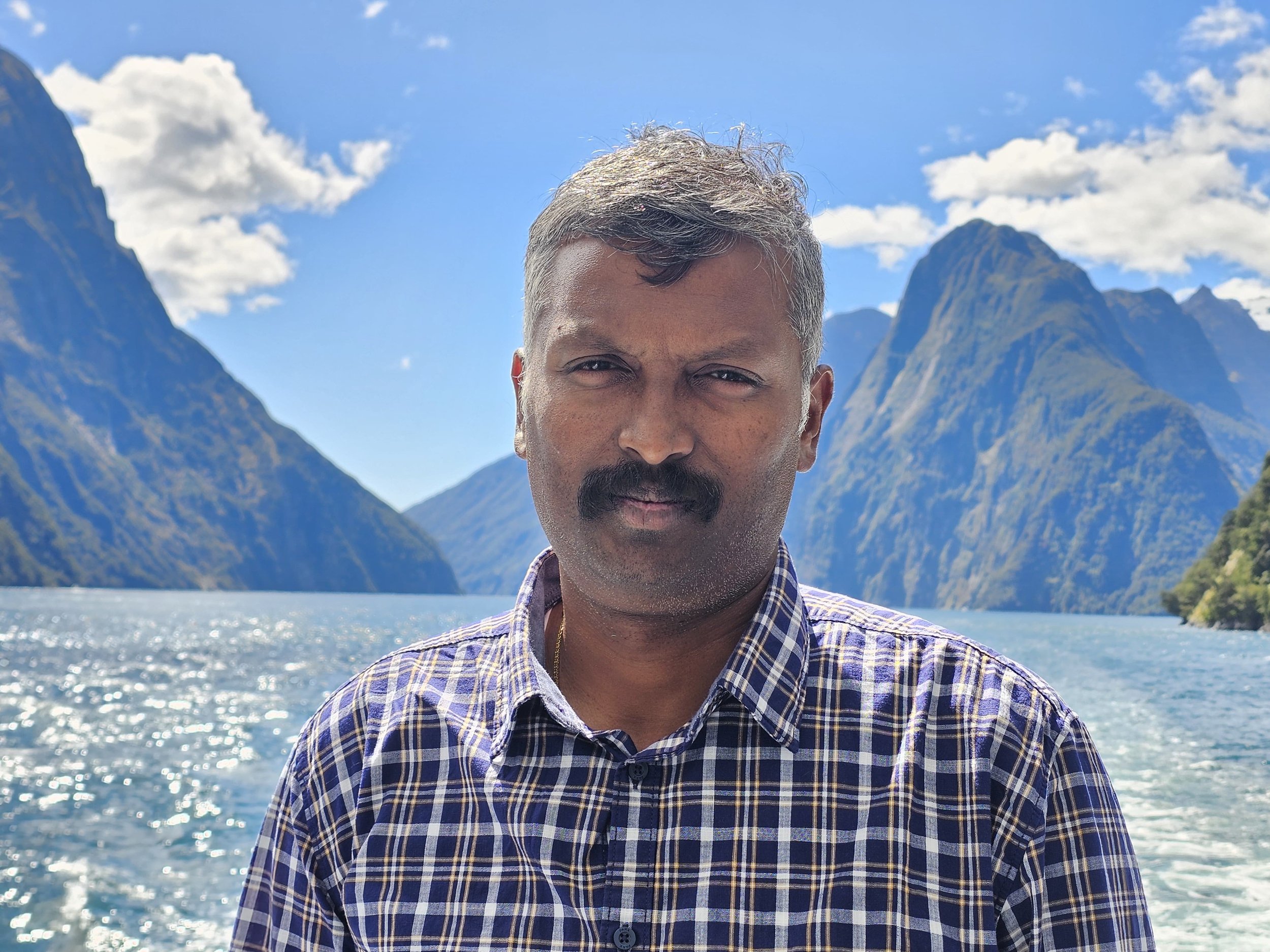
In the world of ever-changing technologies and new ways of operating, career journeys that reflect adaptability, curiosity and continuous growth are central to being ahead of the curve. Today, we sit down with Santhosh Anandakrishnan to learn about his career starting as a systems administrator straight out of university to a leader in Cloud and Security. Having quickly discovered a passion for solving complex problems and optimising systems, this set a foundation that set the tone for Santhosh’s career trajectory to follow.
Over the years, he has navigated the shift from working in deeply technical roles to client-facing and consultative positions, learning firsthand the importance of communication and empathy to deliver meaningful outcomes – qualities that are often underestimated in the tech world.
In this conversation, Santhosh shares the pivotal lessons that shaped his career, the misconceptions he’s regularly helped organisations overcome and his practical advice for emerging cloud professionals carving out their own paths in a rapidly changing industry.
Who is Santhosh Anandakrishnan?
Your career started out as a systems administrator and infrastructure engineer, and you have worked with large consultancies and MSPs.
What aspects of your work set you on the trajectory you’re on now and what is one of the biggest learnings you faced when transitioning from technical roles into client-facing and consultative positions?
My career journey began in a tech firm where I landed my first job as a System Administrator. I was fresh out of college with theoretical knowledge but lacking real-world experience. My role involved managing servers & workstations, troubleshooting issues and ensuring smooth operations of the company’s IT infrastructure. It was in those early days that I discovered my passion for solving complex problems and optimising systems.
One of the biggest lessons I learned was the importance of empathy and communication in conveying technical concepts to non-technical stakeholders. In the early days of my client-facing roles, I found myself overwhelmed by the need to adapt my language and approach. What made perfect sense to me often didn’t resonate with clients who weren’t as familiar with the technical nuances. I learned that understanding my clients’ pain points and business needs was just as important as the solutions I offered. Developing strong relationships built on trust and clear communication became crucial.
Tell us about a project or technical decision early in your career that didn’t go as planned. What did you learn and how does this still influence your work today?
Early in my career as a System Administrator, I was tasked with upgrading the Active Directory system to a newer version. As the project began, I quickly started planning, creating detailed timelines and outlining responsibilities. I presented the plan and timelines to my technical lead. However, in my enthusiasm, I overlooked one crucial aspect: developing a comprehensive backup and disaster recovery (DR) strategy. This oversight, which I now realise was a critical mistake, could have led to significant data loss or system downtime. I was so focused on the migration process itself that I completely underplayed the importance of having a fallback plan.
The lesson I learned from this experience has left an indelible mark on my professional approach. I now understand the critical importance of having a fail-safe plan in place and regularly testing our backups and DR procedures. It's about thinking holistically – considering potential failures, risks and contingencies from the outset, rather than focusing solely on the ideal outcome. This lesson continues to guide my work, ensuring that I'm always prepared for what could go wrong, not just what should go right.
Santhosh’s Perspective On
Skills that make a difference:
Certifications and bootcamps are everywhere. What are the “hidden” skills that separate good cloud professionals from great ones – the things that aren’t being taught in structured programs but make all the difference in real-world delivery?
The cloud landscape is constantly changing, with new tools and services emerging every day. A strong commitment to continuous learning and adaptability allows professionals to keep their skills relevant. With cloud environments being prime targets for security breaches, a solid understanding of security principles is crucial. Great cloud professionals prioritise security in design and implementation, proactively managing risks and ensuring compliance with regulations.
Common misconceptions:
You’ve worked across different organisations with varying levels of cloud maturity.
What are some common misconceptions that organisations have about cloud migration or modernisation that you find yourself constantly correcting? And why do you think these misconceptions persist?
The successful cloud adoption requires changes in processes, skills and management approaches within the organisation. Many overlook the importance of change management and digital transformation strategies, focusing too much on ‘just’ the technology.
Additionally, there's a misconception that cloud solutions are always cheaper than on-premises options. While the cloud can deliver savings through scalability, organisations often overlook costs such as data transfer, ongoing operations and the need for specialised skills. This misunderstanding persists because marketing messages highlight the cost-effectiveness of cloud computing without presenting the whole financial picture. So do your due diligence specific to your client and organisation – don't just run with the latest emerging trends. Understand your client's actual needs and constraints, because what works brilliantly for one organisation can be entirely different for another.
What emerging professionals should know:
You co-organise the Azure Builders Monthly Meetup and are active in the community.
What’s your advice for introverted or early-career cloud professionals who want to build meaningful connections but find traditional networking uncomfortable?
As an example, I started attending meetups to learn about new services and technologies that help me stay up to date with cloud. I also slowly engaged with online platforms such as LinkedIn and community-driven videos for learning.
My recommendation for early-career cloud professionals: bring along a colleague or friend to events. This helps take the pressure off you and build meaningful connections with more ease. Being an attentive listener can also take the pressure off you to feel like you must always have something to say. It also allows you to ask relevant follow-up questions – deepening the conversation and the relationship.
There's a lot of confusion for emerging professionals about where to start in cloud.
Should they specialise early in a specific platform, or stay platform-agnostic? How do you advise people navigating this decision?
The most important thing is to have a solid understanding of fundamental cloud concepts (like IaaS, PaaS, SaaS and cloud security). These principles are applicable across platforms, which makes transitioning or diversifying your skills easier down the line.
The next step is to build a career aligned with a specific cloud platform (such as AWS, Azure or Google Cloud). Specialising in a specific platform or technology means that you gain deep knowledge and expertise in the specific tools and services related to that cloud provider, making you an asset to any company using that provider. My personal advice is to choose a platform that is easily accessible for you to gain practical experience in.
Which leads me to my final piece of advice – practical experience is invaluable. Try working on projects or contributing to open-source initiatives to explore platforms. This will help you build your skill set and validate your ideas.
One of the most common questions that you’re asked by emerging professionals, or those seeking a career transition, is, "How do I get hands-on experience if I need experience to get the job?".
What's your advice for professionals on how to navigate this concern?
Everyone has a different approach to career development. My main advice for emerging professionals is to consider some of the following options:
Equip yourself for the role or career you desire. Take advantage of online courses to learn the necessary technologies and pursue certifications to validate your knowledge and skills.
Gain practical experience in a lab setting. Many cloud platforms offer free credits that allow you to create and manage resources for your projects.
Connect with professionals on LinkedIn and seek out mentorship. Building these connections can lead to mentorship opportunities or even potential job openings.
What's one piece of conventional career advice in tech that you completely disagree with and why?
The advice to "specialise deeply and ignore everything else" is one I push back against. While specialisation has its place, I encourage people to learn across different aspects of technology – cloud platforms, security, networking, integration, AI, data and more. Even if you specialise in one area, you should develop a solid understanding of how these different domains relate to one another, what emerging tools are available and where the risks lie.
This approach equips you with a greater understanding of how different technologies interact, which makes you more adaptable and valuable in your career. Being well-versed in a range of technologies makes you a more effective team member and leader – you can bridge gaps between teams, spot issues early and contribute meaningfully to broader strategic discussions.
Ultimately, versatility tends to create more opportunities and long-term career growth than an overly narrow focus ever could. You don't need to be an expert in everything, but understanding the ecosystem around your specialisation will set you apart.
Finally
What's next for you in this space? Where do you see the most impact and opportunity at the intersection of people and technology over the next few years?
As AI technology advances, we need to learn new skills to keep up and adopt these tools. AI will not only handle repetitive tasks but also enhance what people can do. This will allow teams to focus on more important work. It's also crucial to use AI ethically, making sure it is fair and transparent.
The blend of people and technology creates excellent opportunities for innovation. By focusing on user experience, ethical practices and ongoing education, we can build environments that increase productivity and encourage teamwork and creativity. I'm excited to be part of this journey and see where it leads us!
Santhosh’s story is a testament to what’s possible when technical skill meets curiosity, humility and a genuine desire to help others grow. From early-career learnings to leading community initiatives, mentoring emerging professionals and being a strategic advisor to his clients – Santhosh’s real-world experiences reveal a perspective shaped by hands-on learning that emerging ICT professionals could truly leverage in their own professional journeys.
His insights are a crucial reminder that careers in tech aren’t built solely on certifications or tools. It’s being adaptable, empathetic and curious that allow future ICT professionals to not only stand out from the crowd but also add value to organisations and make a real-world difference.
To connect with Santhosh, find him on LinkedIn.
Stay tuned for the next instalment of our In Conversation series, where we dive into the complex questions that shape technology and ICT – the ones that matter, but rarely make it into everyday discussion.